top of page


Our Initiatives
Curating Spaces of Discussion and Learning:
Weekly Meetings with Young Women
At Chinhari we conduct weekly meetings with girls in the village. These meetings become a space of listening, learning and discussing everyday life, success and struggles.
 |  |  |
|---|
 |  |  |
|---|---|---|
 |
Workshops
Workshops provide opportunities for learning and understanding, which contribute to our growth. We can openly share our joys, sorrows, and emotions. Chinhari is a place where we connect, strengthening our relationships with each other. It's also where we explore new things and enrich our thinking with fresh ideas. We learn about new ideas and find inspiration to improve ourselves.
Ecological and Culture Sensitive Engagements
Desi Kheti
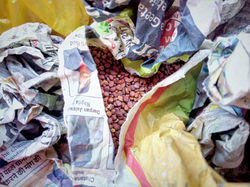
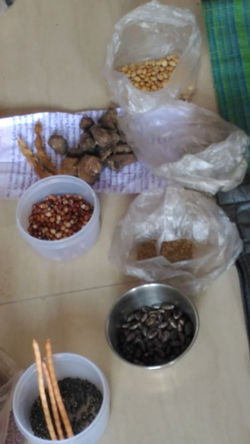
The idea of indigenous farming began when we noticed widespread anemia among the girls. Concerned about the chemicals in market vegetables, we turned to traditional farming and began growing our own produce. Over time, this led to the idea of creating a seed bank to preserve indigenous seeds, so that future generations can know, protect, and use them meaningfully.
 |  |  |
|---|---|---|
 |
 |  |  |
|---|---|---|
 |
Seed Project
During the COVID-19 period, when people were unable to step out of their homes, we started a seed bank. We collected seeds and distributed them to households so that people could grow plants and cultivate around their homes. During this time, we also gathered various seeds found in the forest. This gave us an opportunity to understand and connect more closely with the forest. Since we depend on it, this initiative became an important step for us in reconnecting with and conserving nature.
Lac Cultivation
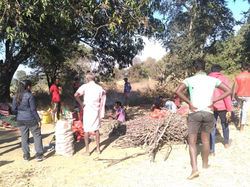
Chinhari began lac cultivation with the aim of giving back to nature what is gradually being lost. Noticing the decline of lac in forests and the disappearance of the lac insect, the initiative focuses on conserving this species while maintaining ecological balance. By reaching out to villages, distributing lac insects, and encouraging cultivation, Chinhari also raises awareness that lac is not just a source of livelihood but an important part of environmental conservation, fostering a sense of responsibility towards nature within the community.
 |  |  |
|---|---|---|
 |
 IMG-20250729-WA0015 | 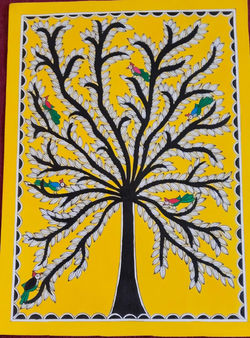 IMG-20250729-WA0007 |
|---|---|
 IMG-20250729-WA0019 |  IMG-20250729-WA0008 |
 IMG-20250729-WA0002 |  IMG-20250729-WA0010 |
 IMG-20250729-WA0026 |  IMG-20250729-WA0005 |
 IMG-20250729-WA0001 |  IMG-20250729-WA0016 |
 IMG-20250729-WA0023 |  IMG-20250729-WA0027 |
 IMG-20250729-WA0009 |  IMG-20250729-WA0006 |
 IMG-20250729-WA0003 |  IMG-20250729-WA0004 |
 IMG-20250729-WA0000 |
Paintings
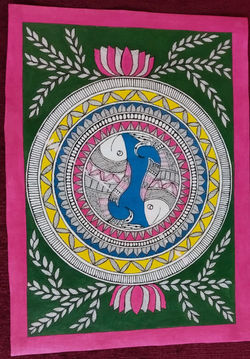
The unprecedented times of Covid was a time to delve into deeper self-reflection. As the world became confined within the four walls of one’s home, the Chinhari girls found an avenue of expression, through their art. The inner workings of their minds were reflected in their art pieces. A time when thoughts became more inward looking and conversations were limited to the digital platforms; painting became a new language of discourse. The medium of painting, largely Gond art, reflected their daily lives, hopes, dreams and aspirations, the conflicts and the troubles. It also became a space for exhibiting their artistic flourish to the rest of the world.
Hamar Srijanshala
2024 became a turning point in the journey of Chinhari as it gave shape to one of the core ideas of community building, through the pathways of Early Childhood Education. Reflection and conversations about the teaching learning practices in the context of the schools in the villages led to identifying gaps in the idea, intent and implementation. Hamar SrijanShala (Abode of Creativity) was imagined. The young associates of Chinhari were inspired and worked relentlessly to render a form to this idea where education was not merely rote learning from the book, but an ability to inquire and question rooted in indigeneity. Hamar Srijan Shala was inaugurated by the community with their blessings and cooperation in the villages of Mardapoti and Dokal. The idea of ‘padenge- padaenge, sekhenge -seekhaenge’ has been our mantra ever since.
We are working on creating indigenous curriculum, content rooted to the indigenous life world, teaching learning practices through play and inquiry, developing books for the children where their own stories are foregrounded.
 |  |  |
|---|---|---|
 |  |
 |  |  |
|---|---|---|
 |
Immersive Co-learning Lab
A Community-Based Experiential Learning & Research Space where learning happens by living together and not from a distance. Knowledge here is relational and situated, emerging through practice, dialogue, and lived contexts. Chinhari welcomes learners, educators, and researchers together to co-create understanding grounded in everyday life. Chinhari Immersive Co-Learning Lab is a space to know oneself in the mirror of others.
bottom of page